
UNDERCURRENTS: Art in the Depths of the Pacific Ocean
Photos: Simon Freund
The research group of Elisa Resconi has been the driving force behind the development of the Pacific Ocean Neutrino Experiment (P-ONE), a next-generation neutrino telescope being developed to be deplored in the northeastern Pacific Ocean. As part of the preparations for this ambitious project, two pathfinder experiments were deployed to study the environmental and technical conditions at a depth of approximately 2,600 metres in the Cascadia Basin.
The first of these, STRAW (Strings for Absorption Length in Water), began monitoring the optical properties of the deep Pacific Ocean in 2018. It was followed by STRAW-b, which was deployed in October 2020 to test technologies and deployment strategies for future components of the P-ONE detector.
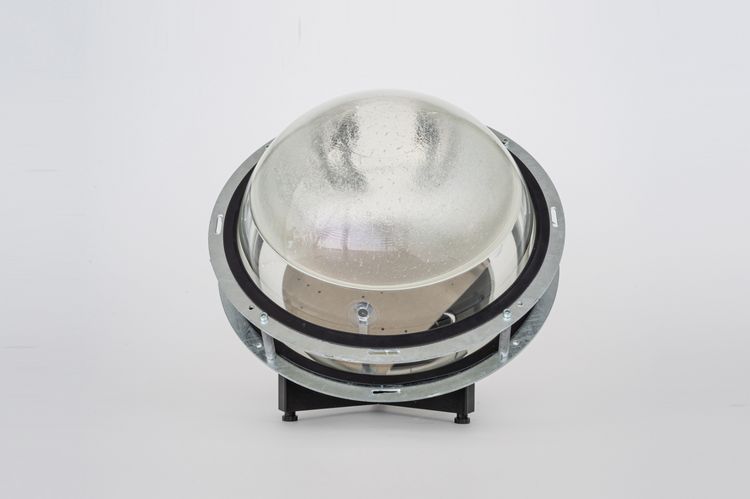
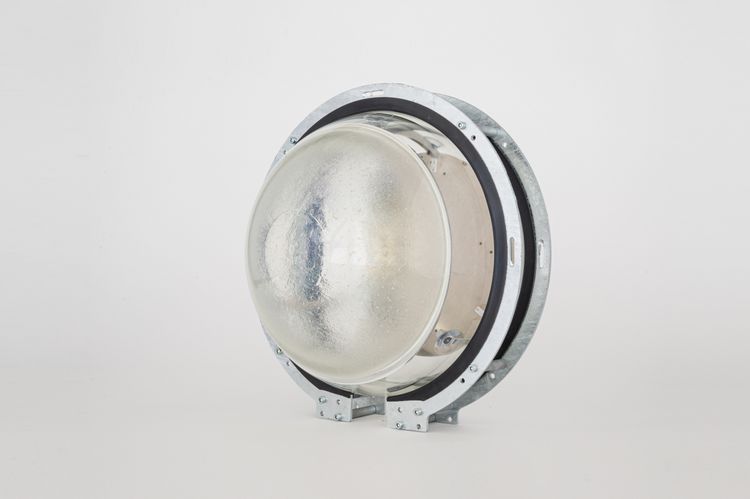
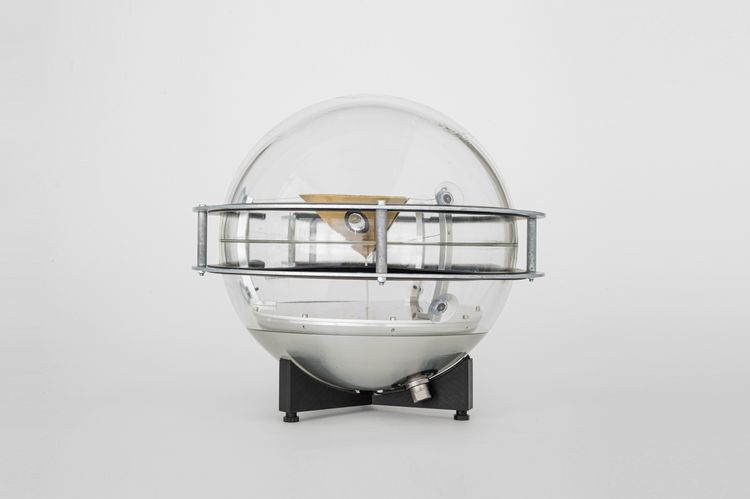
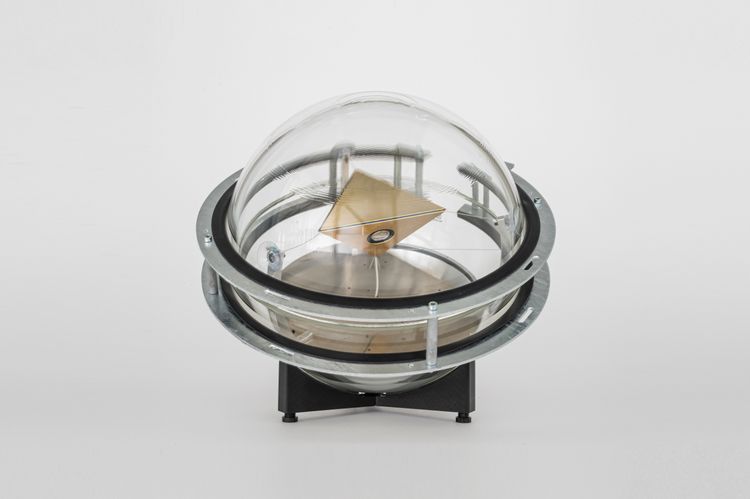
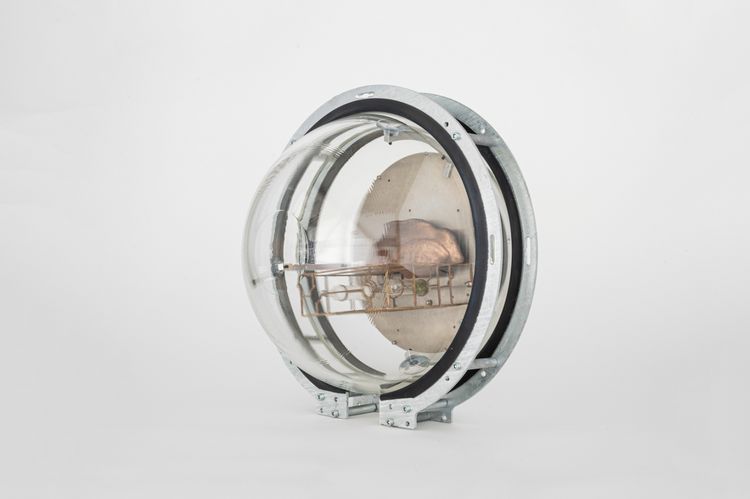
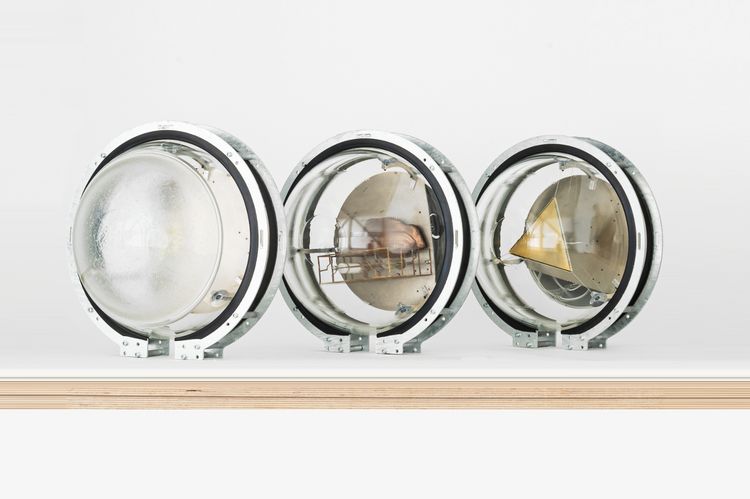
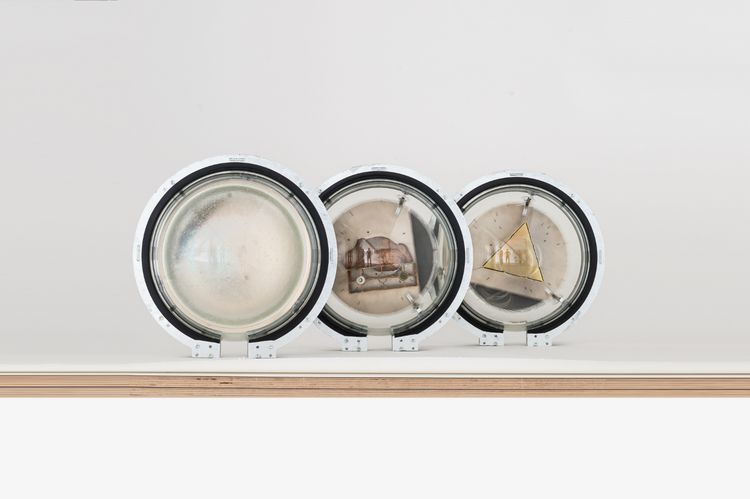
STRAW-b consisted of ten optical modules distributed along a 500-metre-long mooring line anchored to the ocean floor. While most modules were dedicated to scientific and technical measurements, three of the transparent glass spheres contained only environmental monitoring equipment and therefore provided additional space within their housings. This unique circumstance inspired an initiative by Elisa Resconi, who envisioned the deep-sea research infrastructure not only as a scientific instrument but also as a site for artistic exploration.
Transforming a Deep-Sea Research Infrastructure into an Underwater Exhibition Space
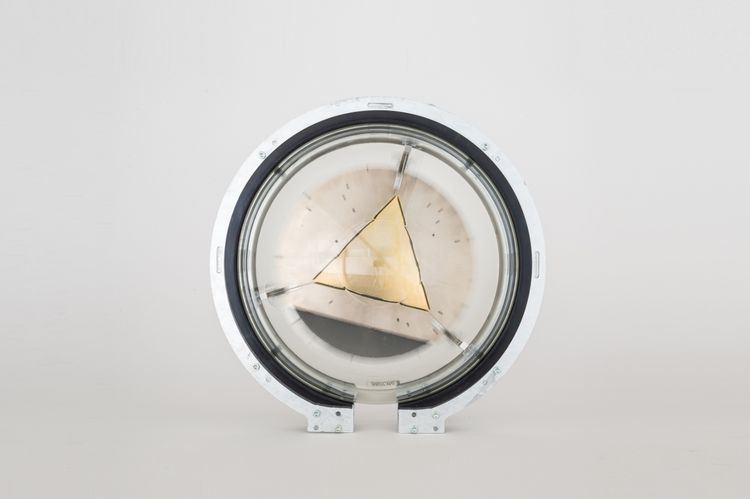
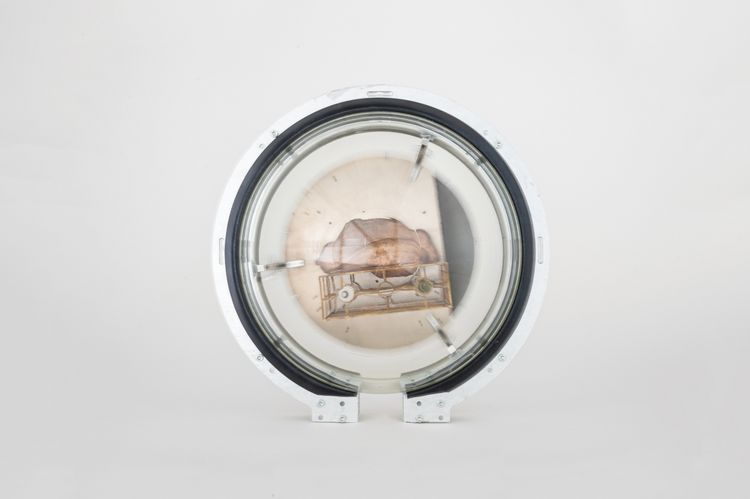
In collaboration with the interdisciplinary project group SFB42, four artworks were created specifically for this extraordinary underwater exhibition. Encapsulated within the glass spheres of STRAW-b and deployed more than two kilometres beneath the ocean surface, the artworks temporarily became part of a unique encounter between contemporary art, ocean environments, and neutrino science.
The underwater exhibition remained in place throughout the STRAW-b deployment. In 2022, the pathfinder phase came to an end when both STRAW installations, together with the embedded artworks, were successfully recovered from the Pacific Ocean and transported from Vancouver to Garching. Today, the artworks and detector components serve as tangible reminders of a project that brought artistic imagination and fundamental research together in an unprecedented deep-sea setting.
Simona de Fabritiis: "CIAO MAMMA SONO TORNATA"
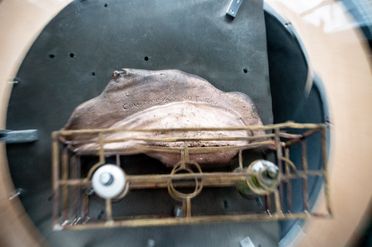
Simona De Fabritiis' bronze sculpture, engraved with the message “CIAO MAMMA SONO TORNATA” (“Hello Mama, I've come back”), greets the shared origins of life from within a STRAW-b sphere, visible through its thick glass enclosure.
Josua Rappl: "ARTEFACTS"
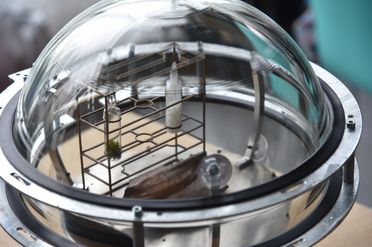
Josua Rappl's artwork ARTEFACTS brings together mineral and biological traces collected from the Gran Sasso massif in Italy, a place explored by members of the SFB42 project group during an interdisciplinary field trip in 2018. During the visit, the group also toured the neutrino experiments housed deep within the Laboratori Nazionali del Gran Sasso. By placing these materials on the floor of the Pacific Ocean, ARTEFACTS creates a symbolic connection between two distant scientific frontiers: the underground laboratory beneath a mountain and the deep ocean observatory. Both are hidden and largely inaccessible environments from which physicists seek to understand the Universe. At the same time, the collected samples function as talismans, carrying wishes for a successful deployment of the detector, fruitful data taking, and the future of Ocean Networks Canada and the P-ONE collaboration.
Jol Thoms: "Radio Amnion"
With Radio Amnion, Jol Thomson transformed part of the STRAW-b infrastructure into a deep-sea audio sculpture. Developed in collaboration with SFB1258 and SFB42, the project broadcasts sound works contributed by artists and researchers around the world, sending messages of care, affection, and solidarity into the ocean's depths.
A reverse Golden Record for the twenty-first century, Radio Amnion directs its transmissions not toward distant stars but toward the Earth's own "amniotic waters". Broadcast during periods of high tide, the compositions evoke connections between ocean, planet, and cosmos while reflecting on the entangled relationships between human and non-human forms of life.
Lea Vajda: "sea me not"
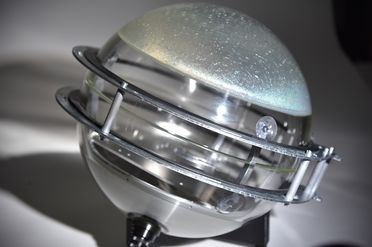
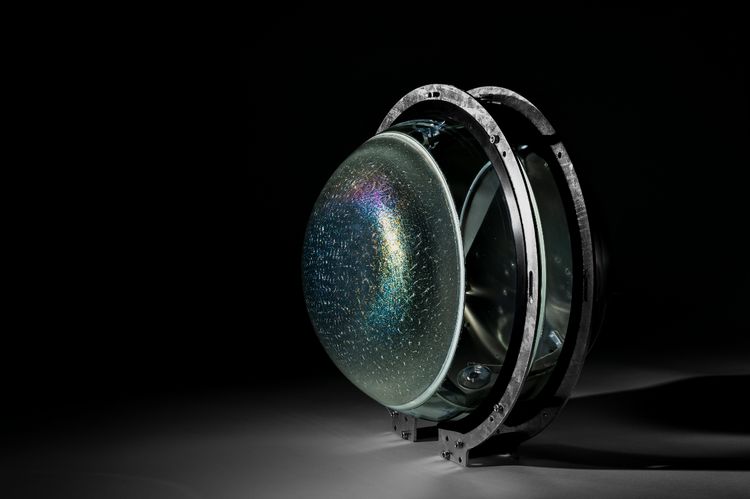
Reflecting on humanity's desire to understand and illuminate the unknown, Lea Vajda's glass intervention introduces opacity into one of the detector spheres. An iridescent half-shell transforms the sphere into a refuge for imagined bioluminescent creatures, offering a place to hide from observation and share their luminous secrets. sea me not proposes that not everything must be transparent to science, allowing some mysteries of the deep sea to remain undiscovered.