
- Neutrinos & Dark Matter: A Collaboration across Science, Art, and Society
- Radio Amnion live: Sonic Transmissions of Care in Oceanic Space
Neutrinos & Dark Matter at Haus der Kunst: Between Observation & Imagination
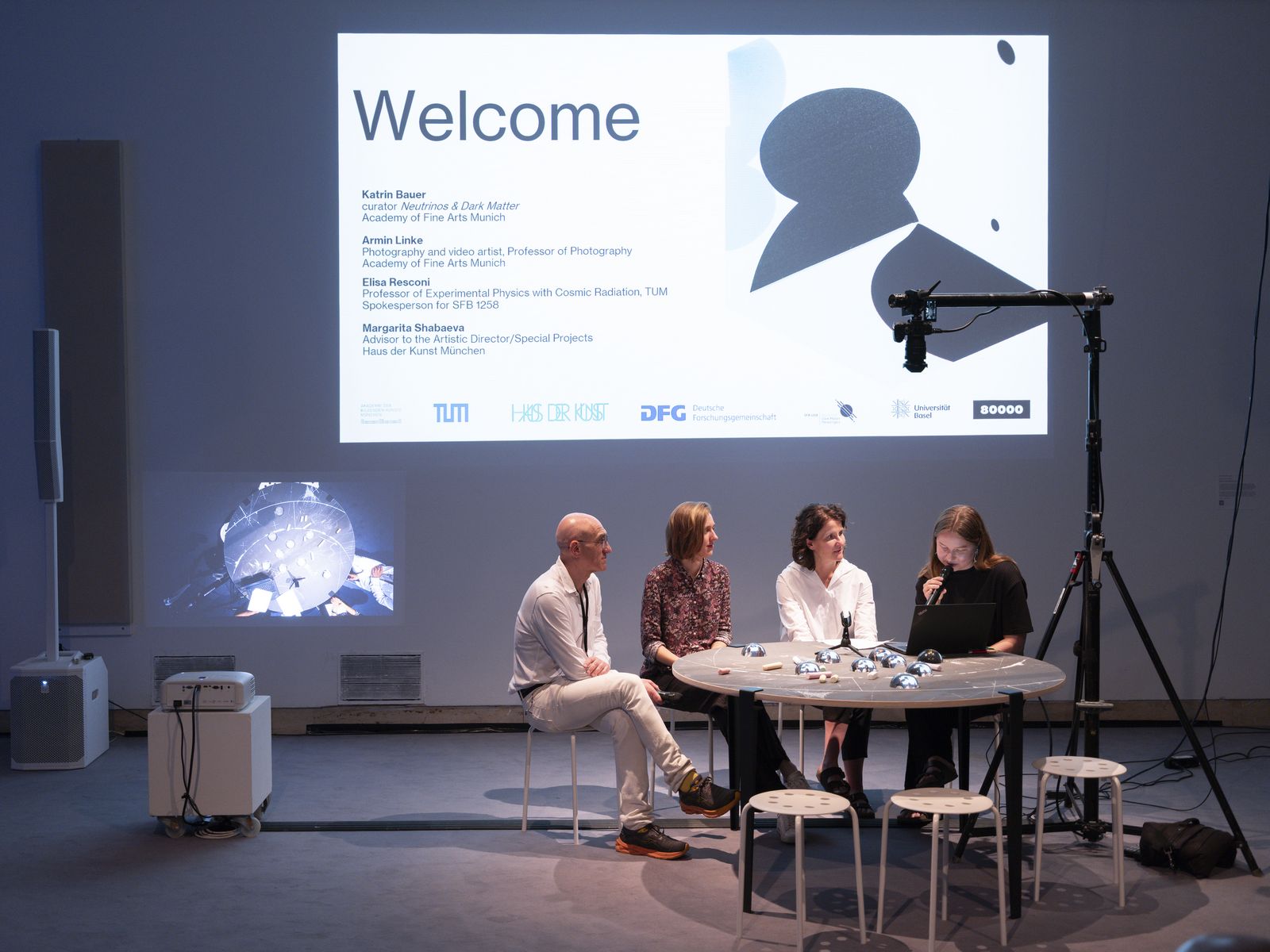
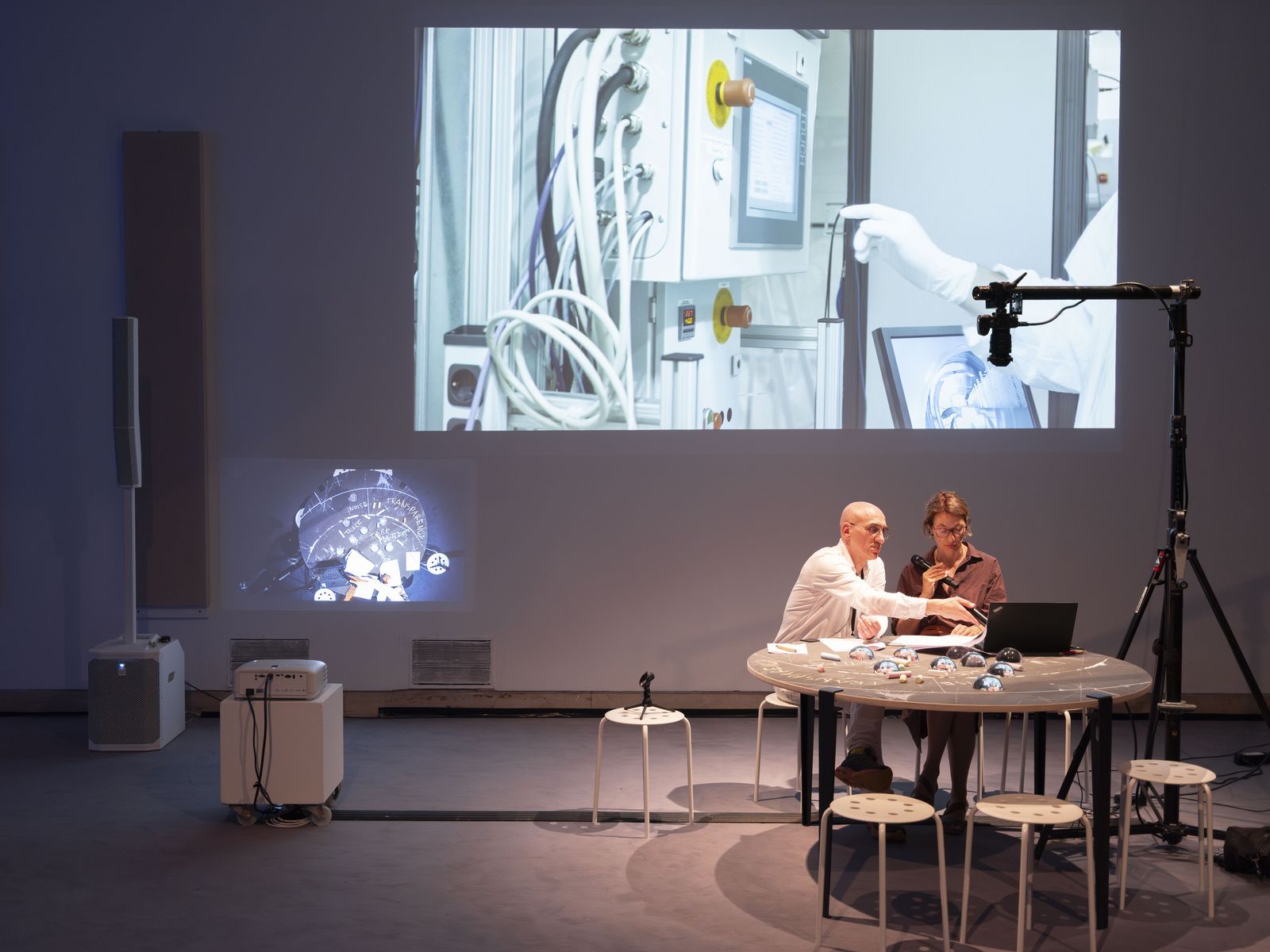
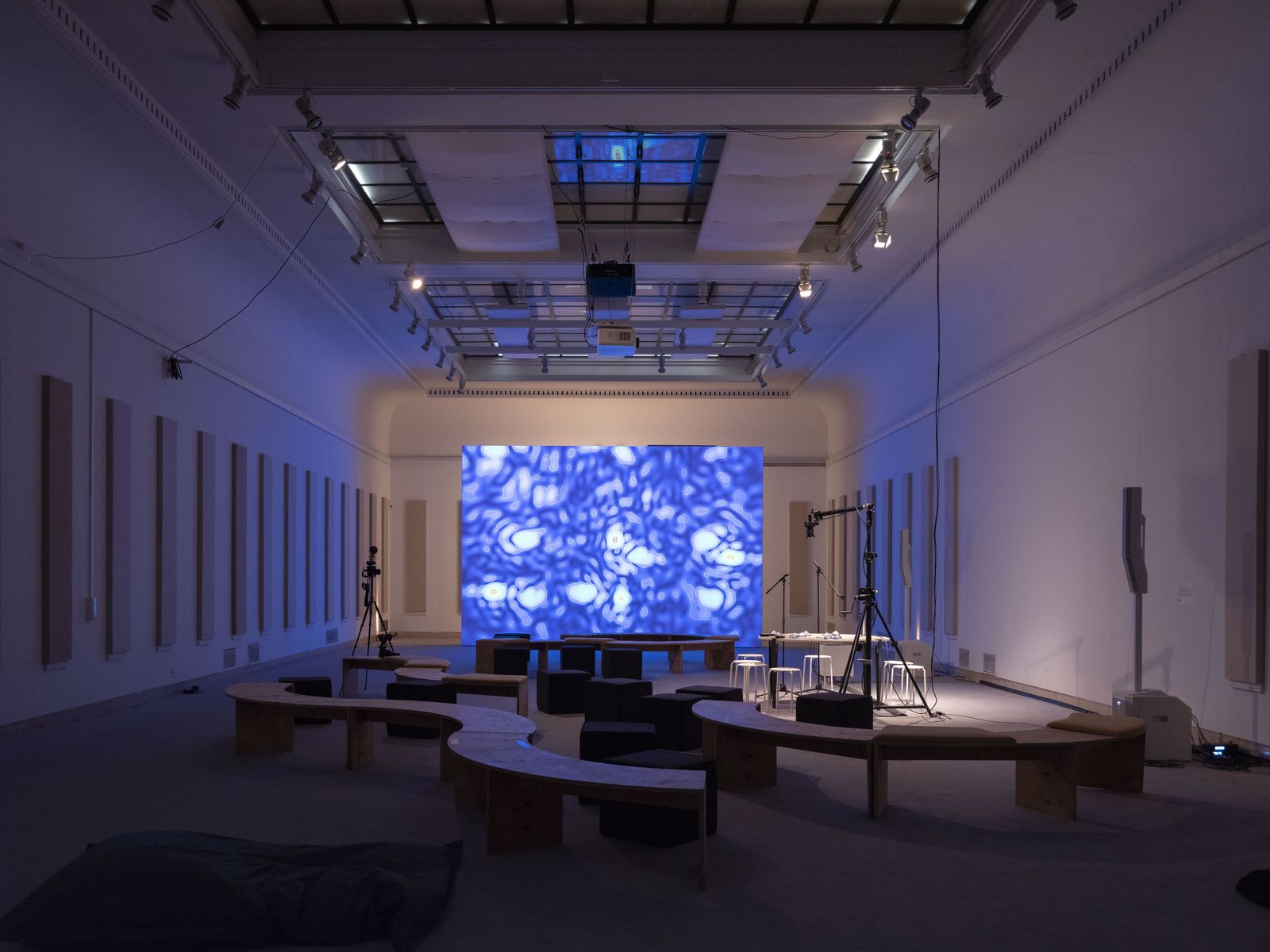
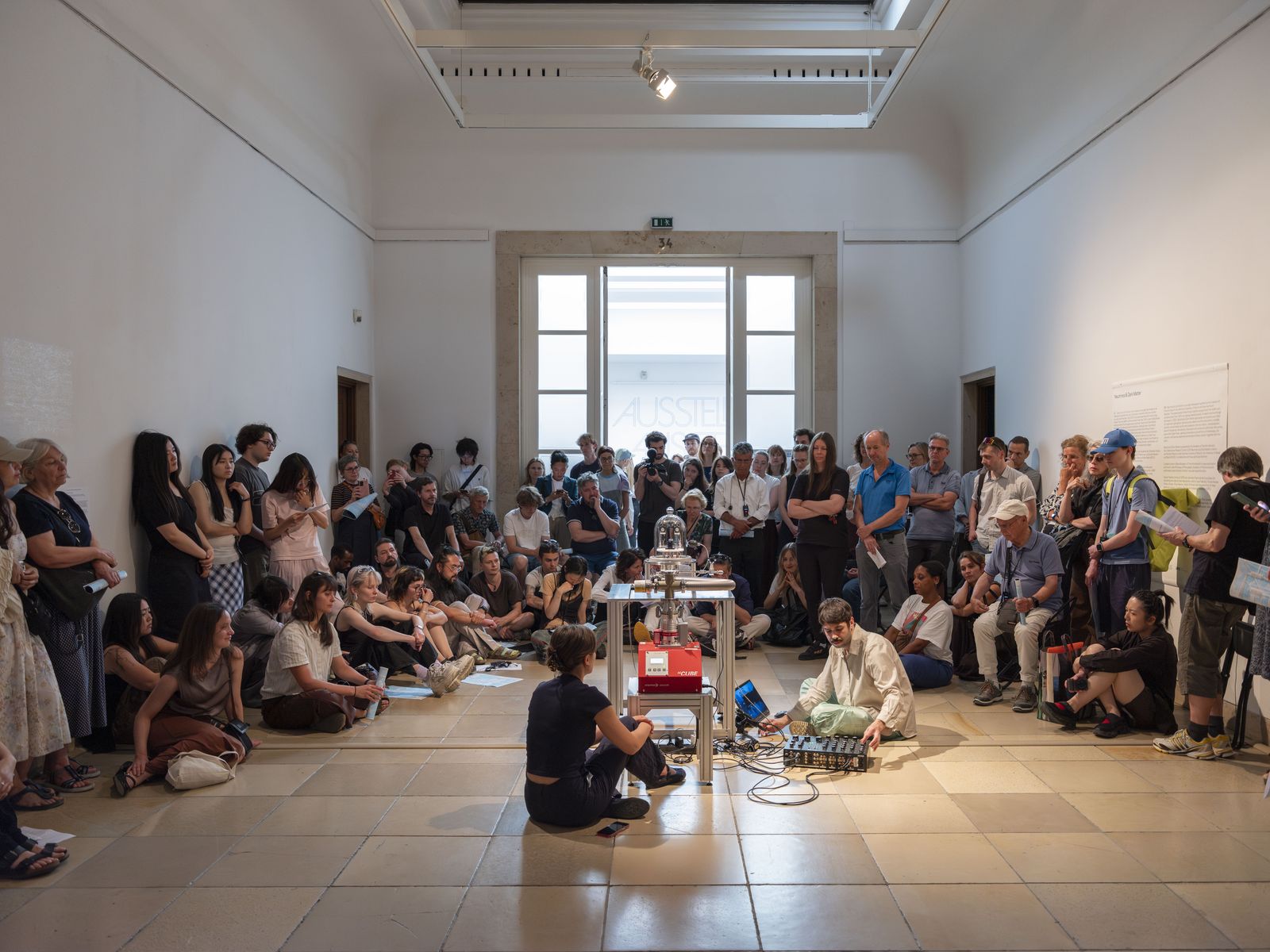
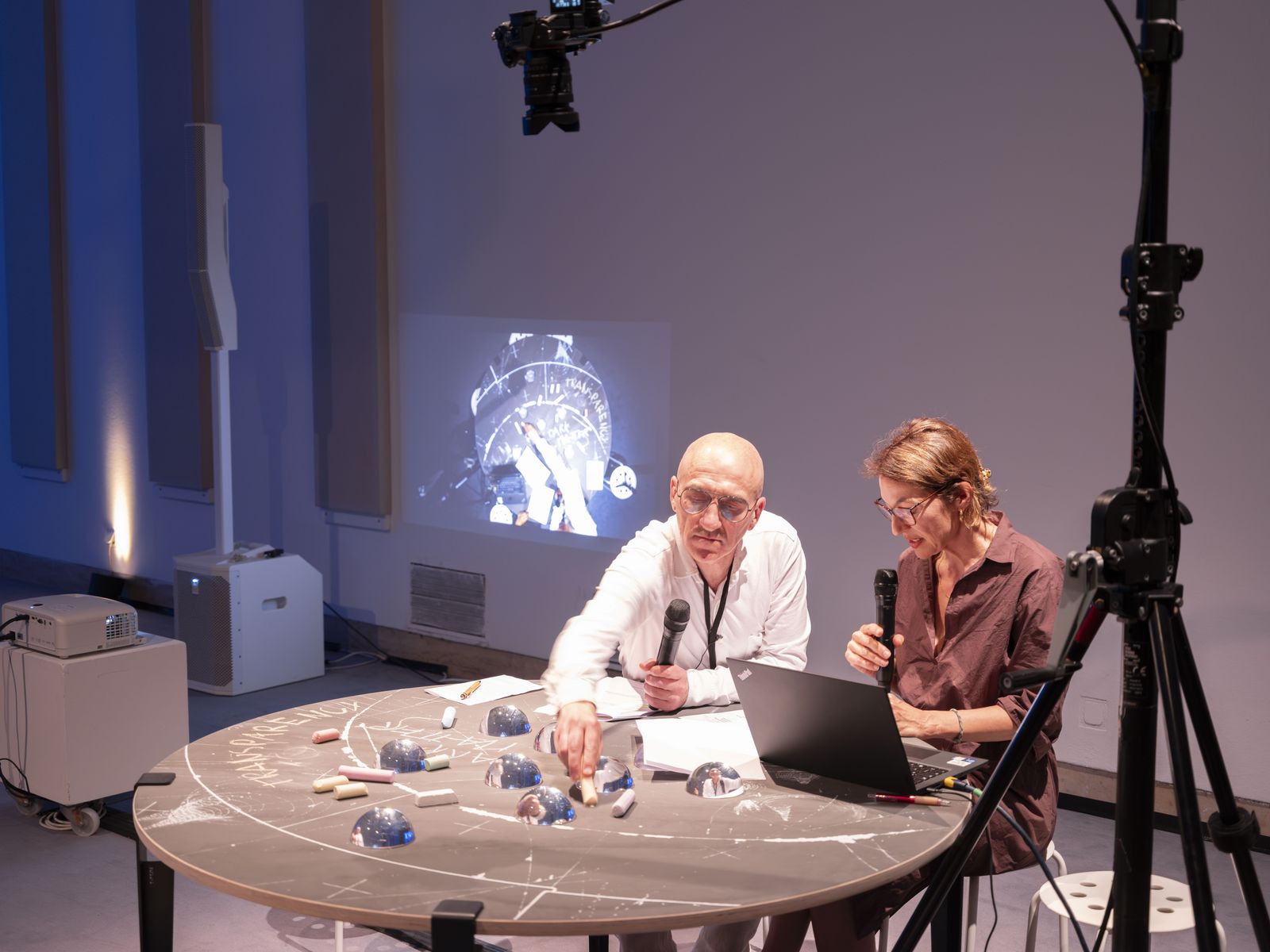
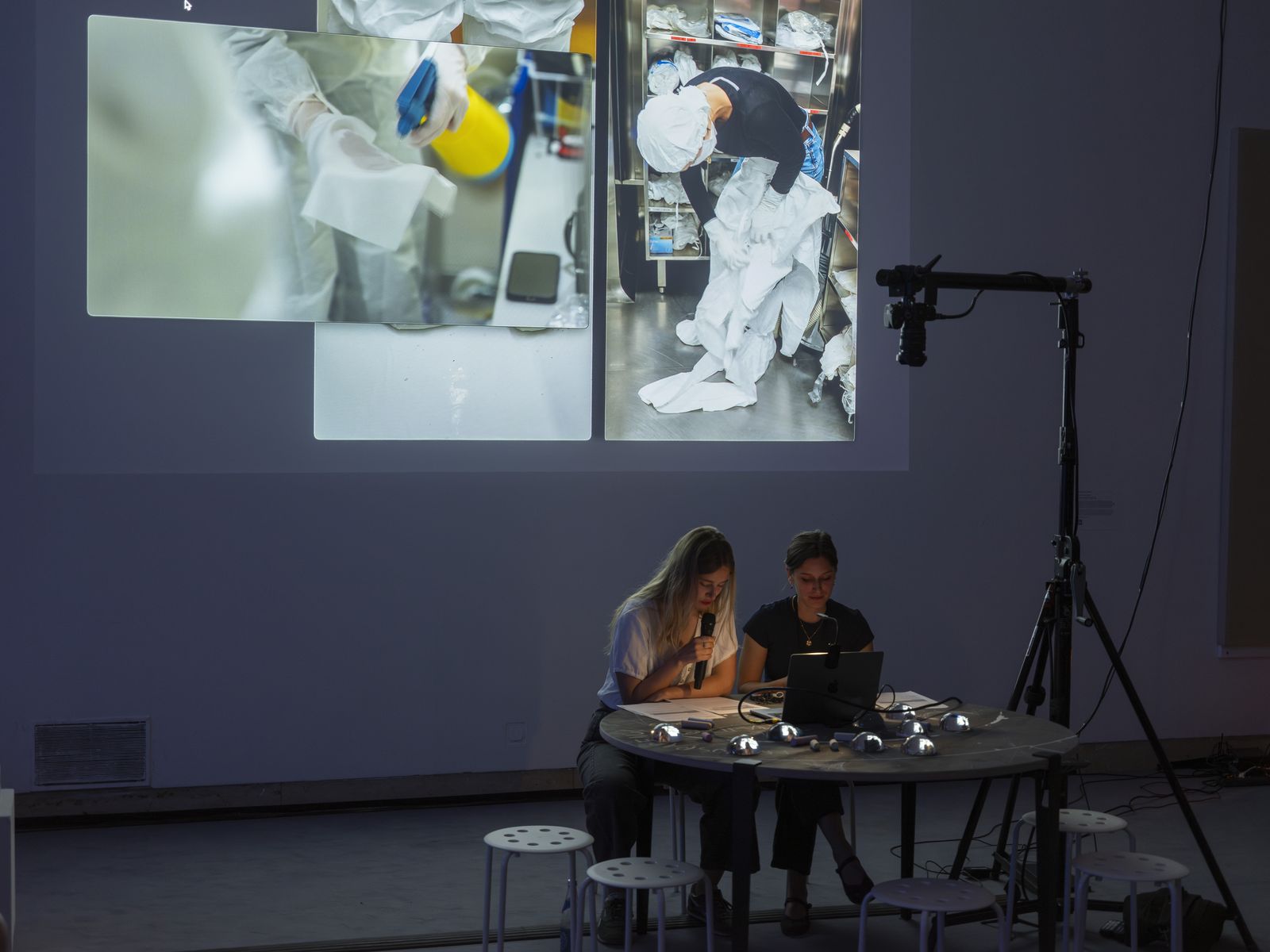
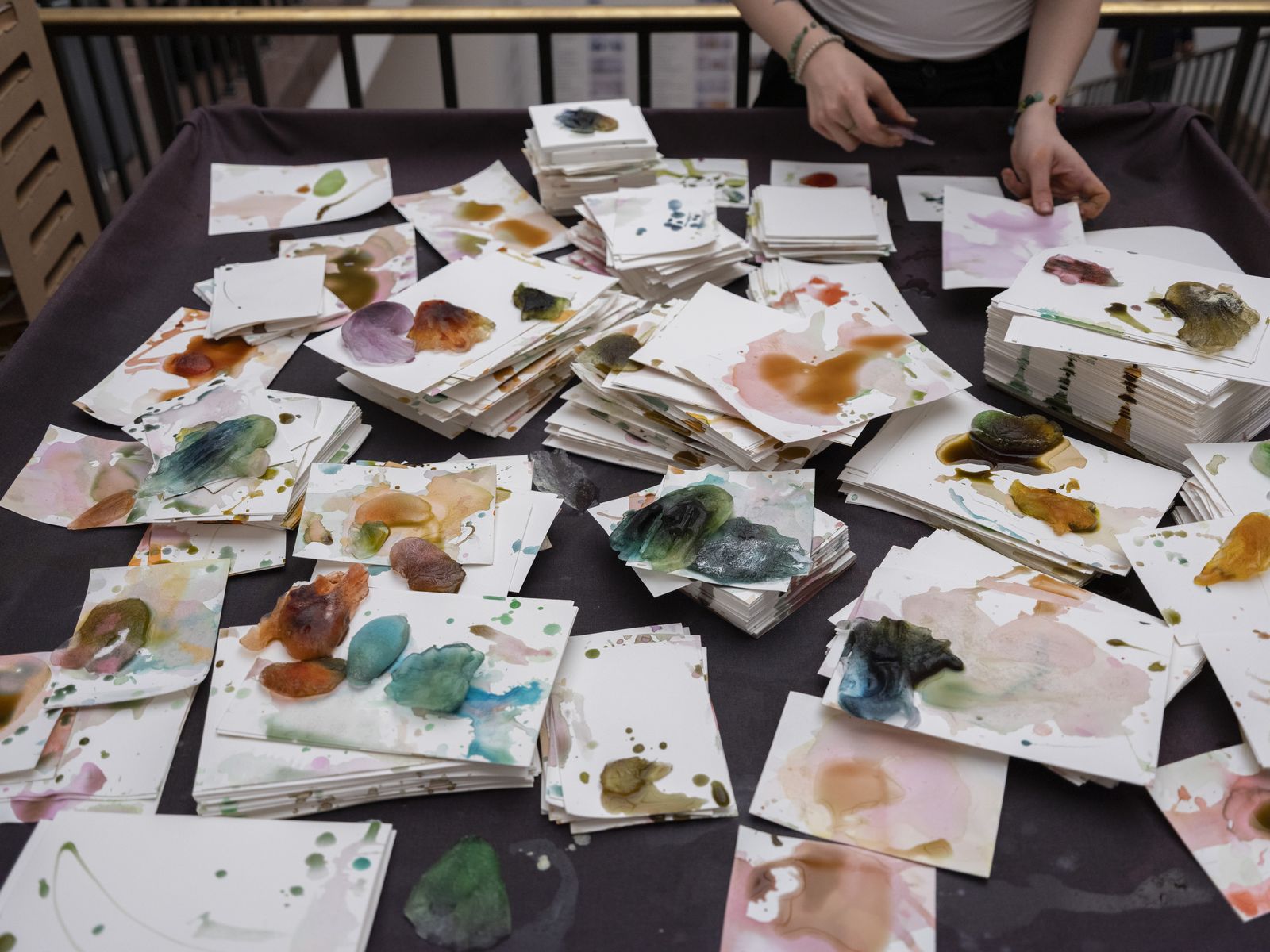
Neutrinos & Dark Matter at Haus der Kunst München presenting projects from emerging artists and young physicists, 29 May 2026. Photos: Anastasiia Batishcheva
On 29 May 2026, a new collaboration between emerging artists from the Academy of Fine Arts Munich (AdBK) and early-career researchers from the Collaborative Research Centre 1258 Neutrinos and Dark Matter in Astro- and Particle Physics (SFB1258) presented the first public outcomes of their joint exploration. Entitled Neutrinos & Dark Matter, the project transformed the auditorium and surrounding spaces of Haus der Kunst Munich into a site of encounter between contemporary art and astrophysics.
Developed by students and researchers from the Technical University of Munich and students of the Academy of Fine Arts Munich, the project brought artists and scientists together in an ongoing dialogue that began in 2025 and continues to evolve.
Approaching astrophysics as a field of imagination, perception, and collaboration, Neutrinos & Dark Matter explored how scientific instruments, invisible particles, environments, and human bodies intersect. Through installations, performances, lectures, discussions, and participatory formats, the programme invited visitors to engage with questions of knowledge production, observation, uncertainty, and the limits of visibility.
The event featured contributions by Anastasiia Batishcheva, Sofian Biazzi, Jiangyue Guo, Nicolas Maximilian, Camilla Prey, Jiwon Song, Janis Strobl, and Armin Linke (AdBK); Rosanna Deckert, Matteo Giacomelli, Michael Hock, Sofia Lonardi, Selina Rudolph, Alexandra Scholz, and Kristian Tchiorniy (SFB1258); and Estelle Blaschke and Nina Caviezel (University of Basel). The project was curated by Katrin Bauer in collaboration with Elisa Resconi (TUM), Armin Linke (AdBK) and Andrea Lissoni (Haus der Kunst).
Installations
The following installations were presented as part of the evening, offering visitors a variety of ways to engage with the project's central themes:
Untitled, for Antonia, by Anastasiia Batishcheva
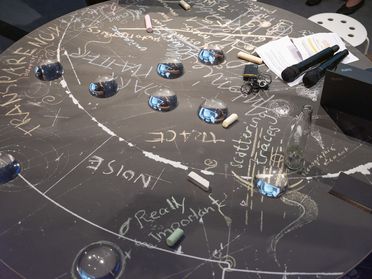
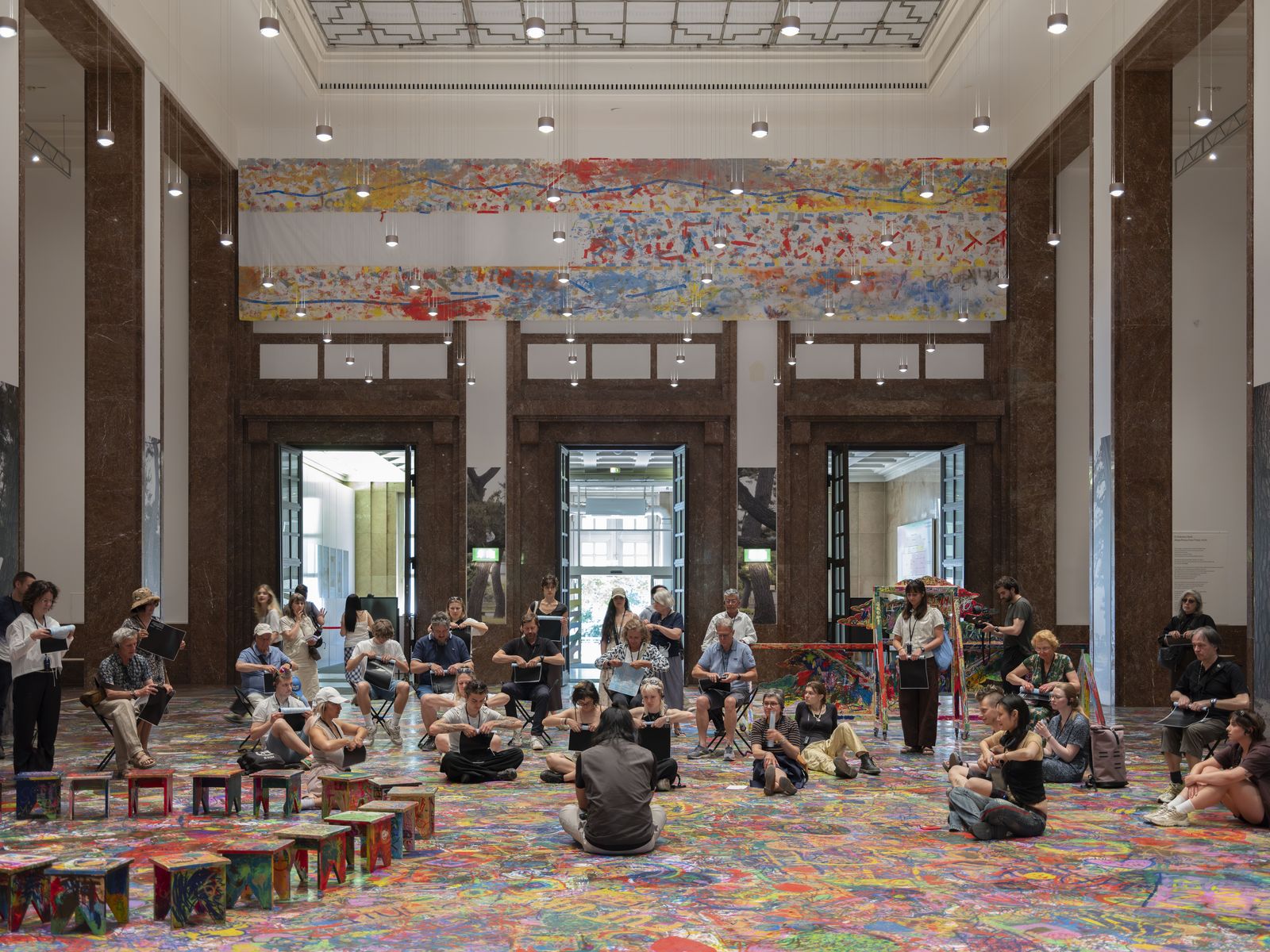
Inspired by the history of CERN’s “women scanners”, whose meticulous analysis of bubble-chamber photographs contributed significantly to early particle physics, Anastasiia Batishcheva’s Untitled, for Antonia transformed scientific observation into a collective activity. Combining large-scale astrophysical imagery, magnifying glasses, and a participatory table setting, the work referenced the scanning tables used in this overlooked form of scientific labour and invited visitors to engage directly with scientific images and practices of observation. (Photo: Anastasiia Batishcheva)
Vacuum Chamber by Sofian Biazzi and Jiangyue Guo
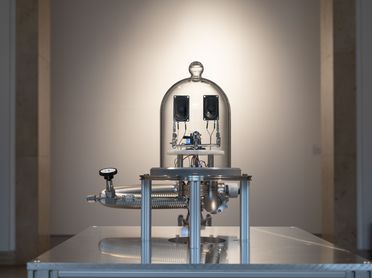
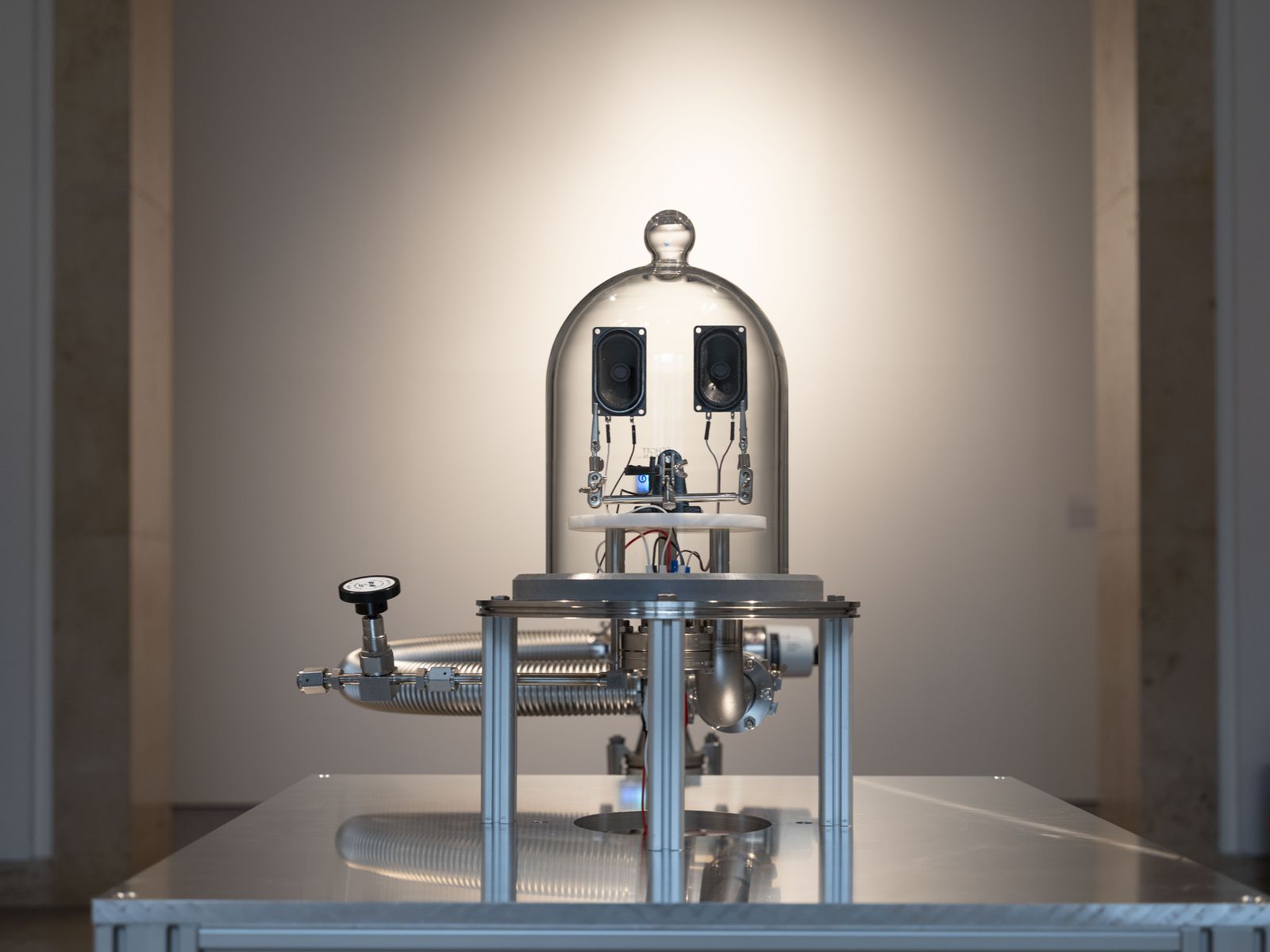
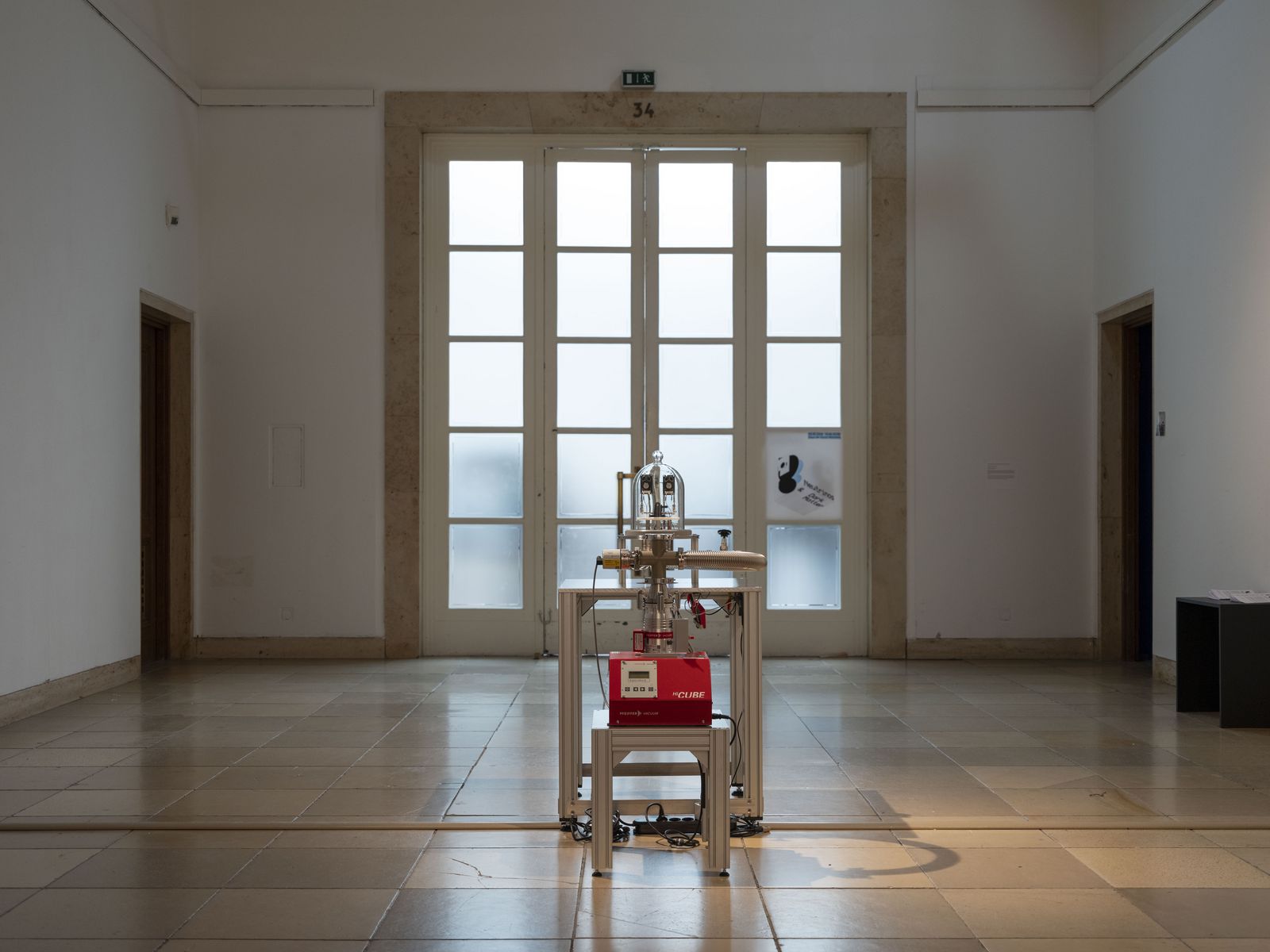
In Vacuum Chamber, artists Sofian Biazzi and Jiangyue Guo collaborated with physicist Rosanna Deckert to investigate emptiness, vacuum, and sound. Activated twice during the evening, the installation used loudspeakers and microphones inside a vacuum chamber to make audible the changing behaviour of sound as air was gradually withdrawn. (Photo: Anastasiia Batishcheva)
FLAVORS by Sofian Biazzi and Sofia Lonardi
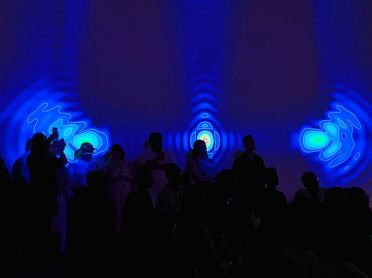
The two-channel video installation FLAVORS by Sofian Biazzi and Sofia Lonardi explored parallels between ultrasound propagation and neutrino oscillations. Through scientific simulations, the work connected everyday experiences of sound with the elusive quantum behaviour of neutrinos. (Photo: Sofian Biazzi)
Ghost Chamber by Alexandra Scholz, Janis Strobl, and Kristian Tchiorniy
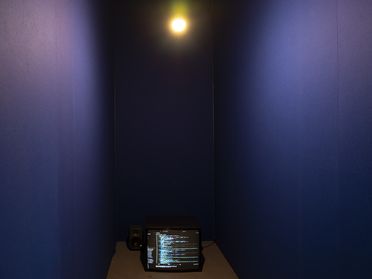
The Ghost Chamber, created by Alexandra Scholz, Janis Strobl, and Kristian Tchiorniy, reflected on neutrinos through the lens of signal transmission and secrecy. Drawing on the mysterious world of shortwave numbers stations, which broadcast encrypted messages to unseen recipients around the globe, the installation imagined the constant flux of particles passing through matter as a stream of coded signals originating from the cosmos. The work connected the hidden language of espionage with the invisible universe revealed by particle physics. (Photo: Anastasiia Batishcheva)
What is important by Nicolas Maximilian
With what is important, Nicolas Maximilian assembled a multichannel sound installation around a deceptively simple question. Through speakers historically associated with one-way public communication, diverse voices reflected on what matters most, creating a space for personal and collective contemplation.
Live Performances
The following live performances, lecture performances, and public engagement activities formed part of the evening’s programme:
Wind from the Emptiness (空穴来风) by Jiangyue Guo, Sofian Biazzi, Rosanna Deckert, Michael Hock, and Camilla Prey
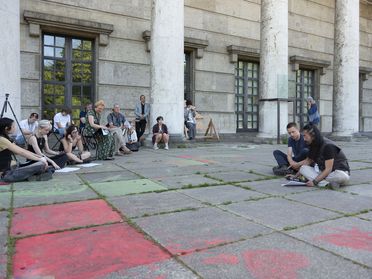
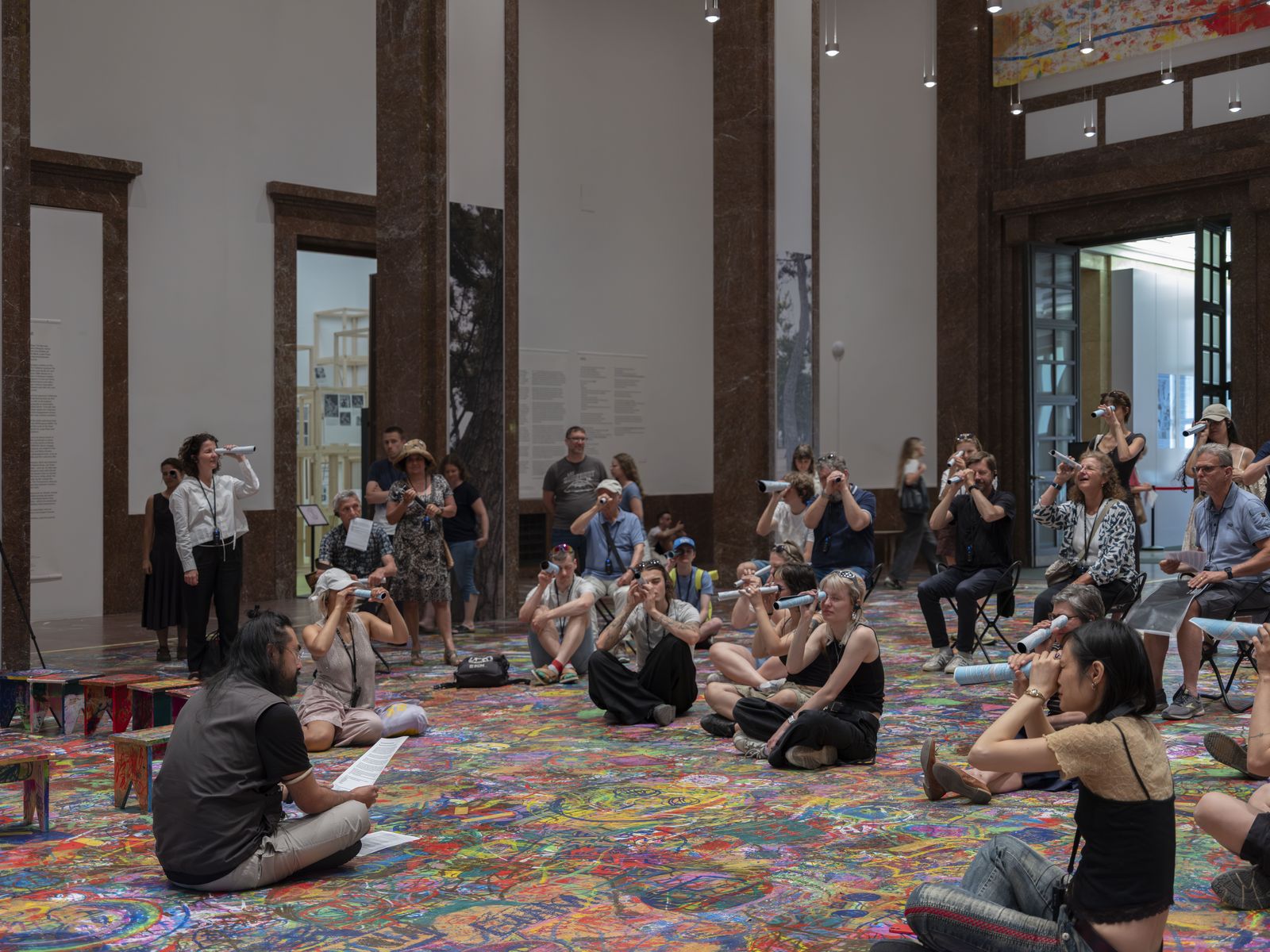
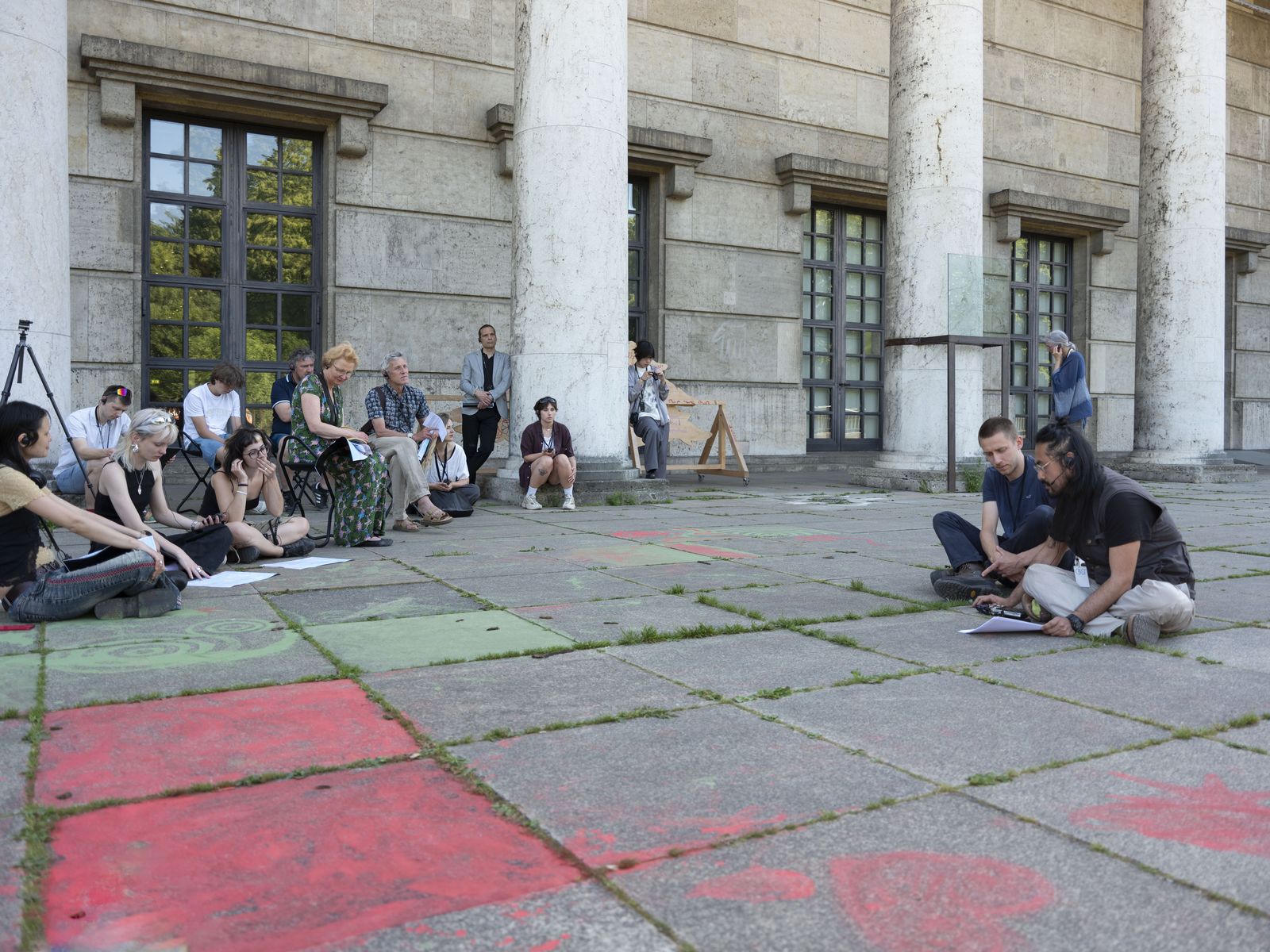
The live programme opened with Wind from the Emptiness (空穴来风) by Jiangyue Guo, Sofian Biazzi, Rosanna Deckert, Michael Hock, and Camilla Prey. Presented twice during the evening, the performative reading unfolded as a moving social score that travelled through different areas of the museum. Treating the vacuum as both a physical phenomenon and a cultural concept, the performance invited participants to experience absence, atmosphere, and space in new ways. (Photo: Anastasiia Batishcheva)
The Chances of Scattering by Jiwon Song and Selina Rudolph
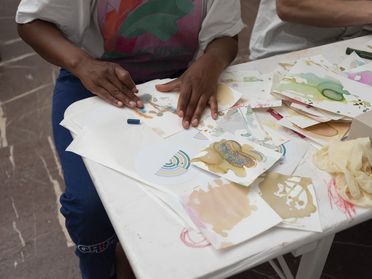
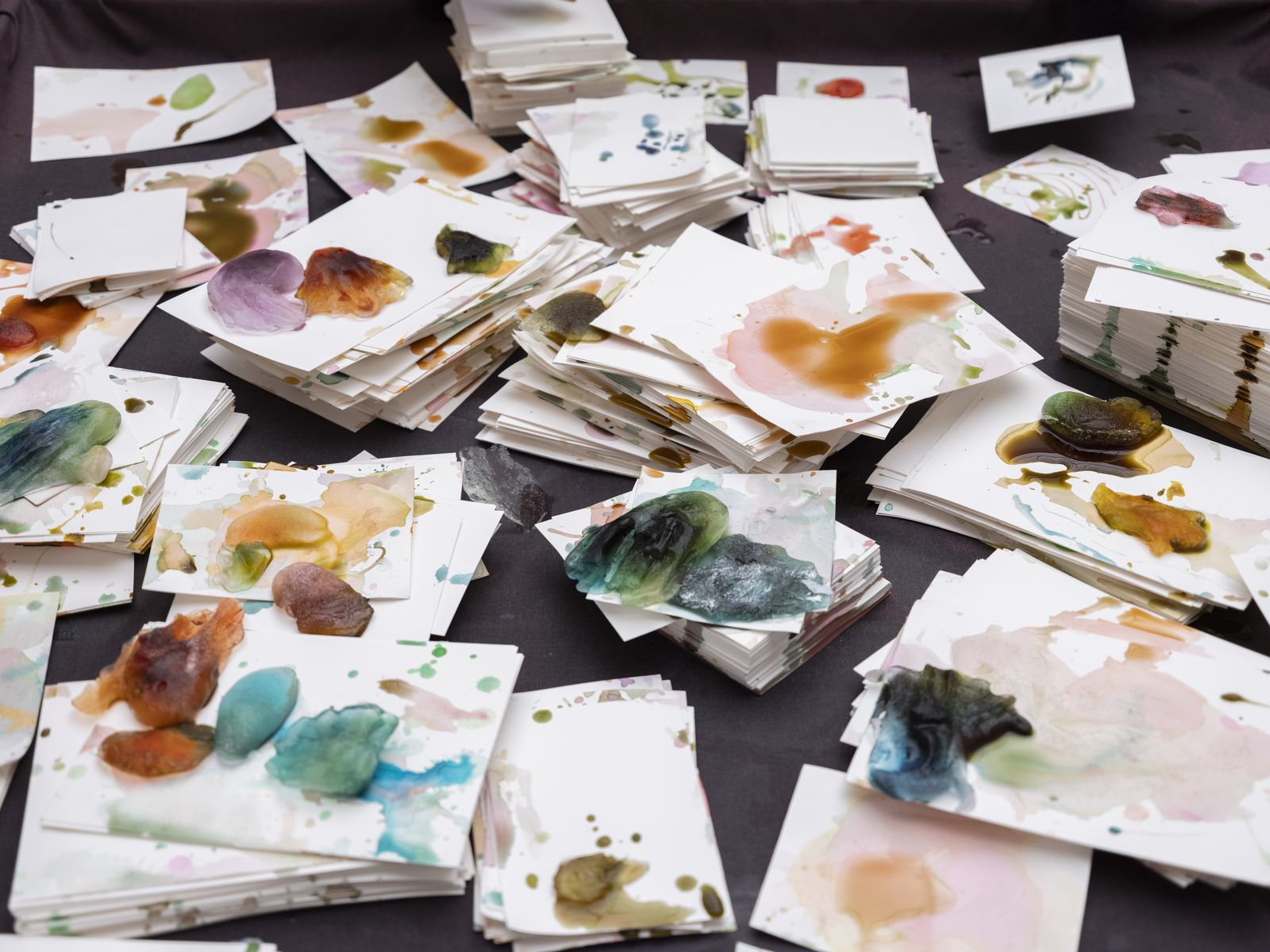
Visitors were invited to take part in The Chances of Scattering by Jiwon Song and Selina Rudolph. As ghost-shaped blocks of ice slowly melted onto paper, participants collectively produced delicate traces that alluded to the elusive interactions of neutrinos. Through this shared act of observation and mark-making, the work evolved over time and now forms part of the foundation for Jiwon Song’s forthcoming publication. (Photo: Anastasiia Batishcheva)
Impossible Images by Estelle Blaschke and Armin Linke
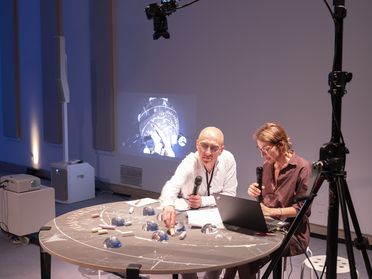
In Impossible Images, photography historian Estelle Blaschke and artist Armin Linke examined the visual and rhetorical frameworks used to represent neutrinos. Their lecture performance addressed the challenge of making visible entities that fundamentally resist direct observation, questioning how scientific imagery shapes understanding. (Photo: Anastasiia Batishcheva)
Situated ladders by Matteo Giacomelli
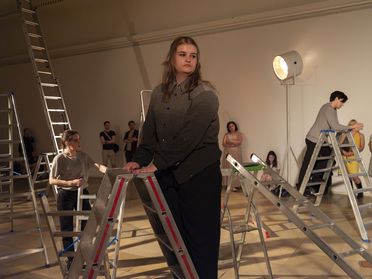
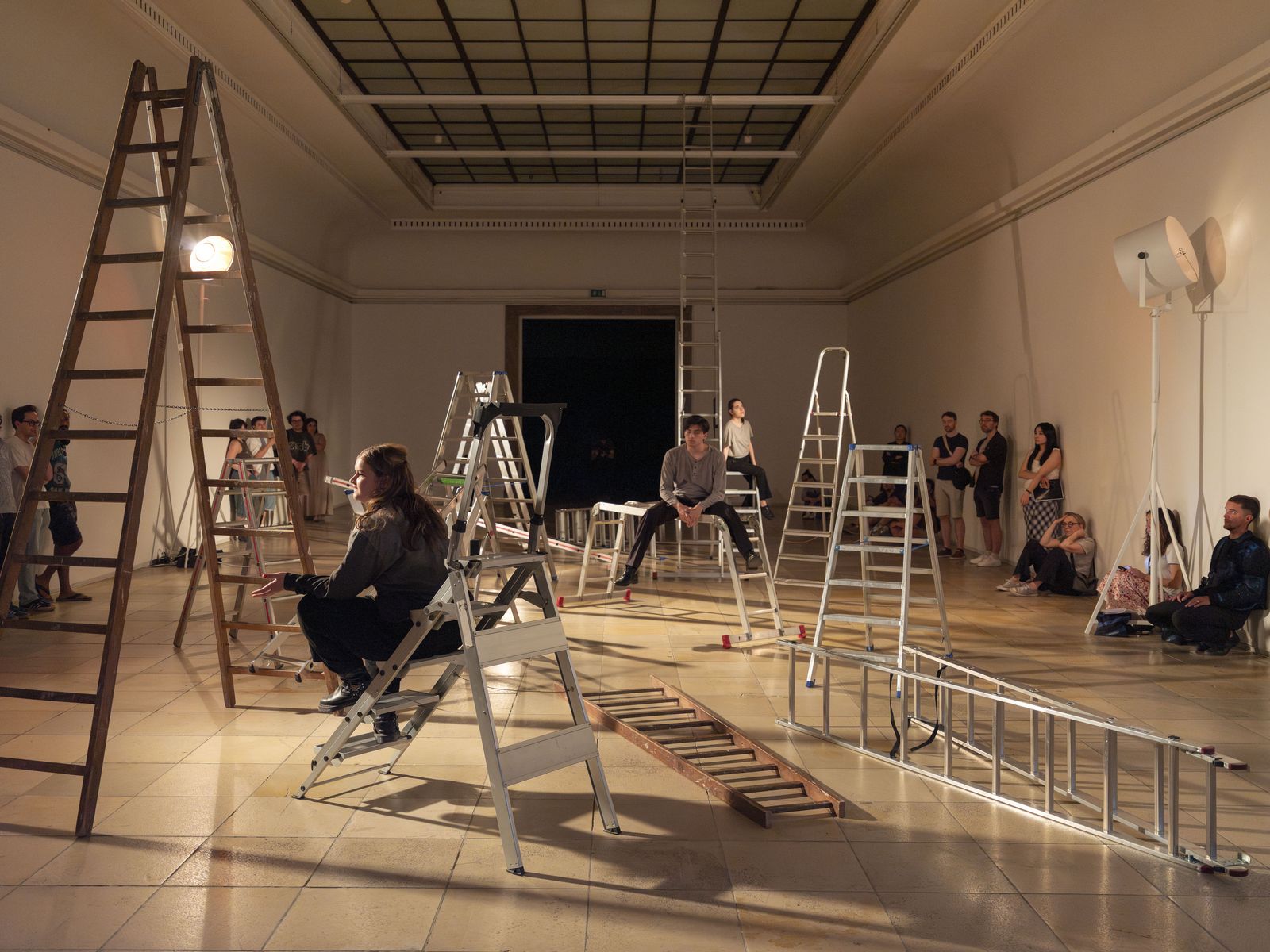
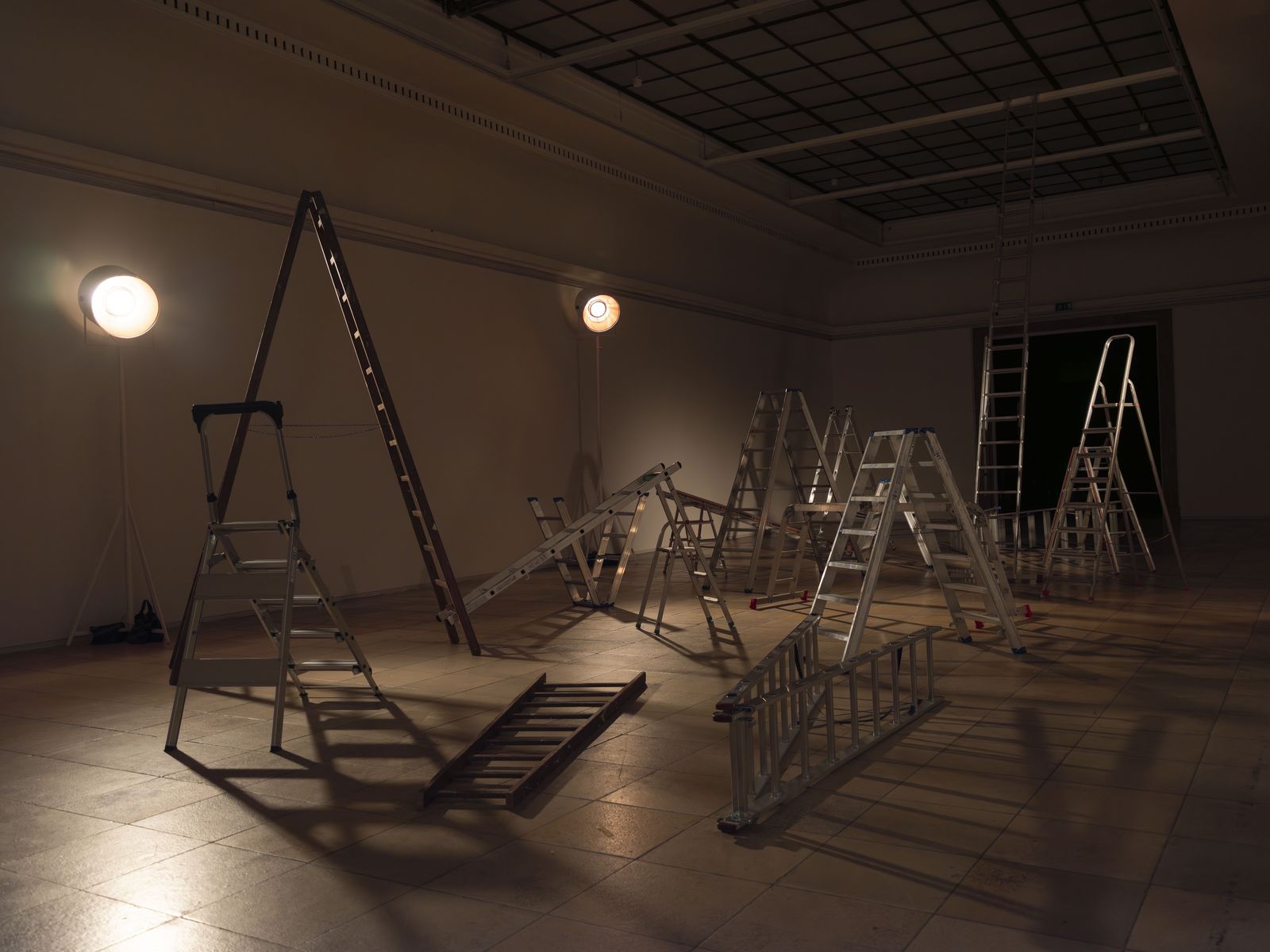
Matteo Giacomelli's live sculpture situated ladders investigated language itself as a medium of scientific knowledge. Through a polyphonic arrangement shaped by resonance, interference, and misunderstanding, the performance highlighted the linguistic structures that both enable and constrain astrophysical research. (Photo:Anastasiia Batishcheva)
Cleanroom Choreography by Nina Caviezel and Rosanna Deckert
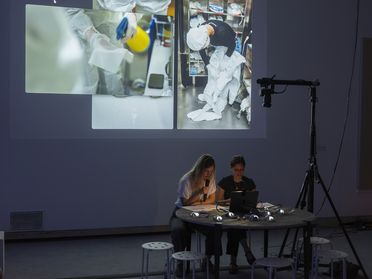
The lecture performance Cleanroom Choreography by Nina Caviezel and Rosanna Deckert shifted attention to the highly controlled environments of scientific experimentation. Combining artistic and scientific perspectives, the work examined the embodied practices, architectural settings, and disciplinary routines through which researchers encounter the unknown. (Photo: Anastasiia Batishcheva)
About the Project
Neutrinos & Dark Matter is a long-term collaboration between the Academy of Fine Arts Munich, the Collaborative Research Centre 1258 “Neutrinos and Dark Matter in Astro- and Particle Physics” at the Technical University of Munich, and Haus der Kunst München. Conceived as a series of temporary interventions within Open Haus, the project continues to explore how artistic and scientific practices can jointly engage with phenomena that remain beyond direct human perception.
The project was funded by the German Research Foundation (DFG).
Coordinators
- Prof. Armin Linke
- +49 89 3852-0
- armin.linke@adbk.mhn.de
- https://www.adbk.de/de/
- Katrin Bauer
- +49 89 3852-0
- katrin.bauer@adbk.mhn.de
- https://www.adbk.de/de/
- Prof. Dr. Elisa Resconi
- +49 89 289 12422
- elisa.resconi@tum.de
- www.cosmic-particles.ph.tum.de
- Petra Riedel
- +49 89 289 12436
- petra.riedel@tum.de
- http://www.sfb1258.de