
When a galaxy sits between us and a distant supernova, the galaxy's gravity acts like a cosmic magnifying glass, splitting the light into multiple images that arrive at slightly different times. By precisely measuring these time delays, Prof. Suyu can determine the expansion rate of the universe with unprecedented accuracy - down to 1%.
But LENS-ON-FIRE goes even further: the same time-delay trick allows scientists to "preview" an upcoming supernova and then watch its earliest moments unfold in full detail - something never done before. This will finally shed light on a long-standing mystery about what actually triggers these giant stellar explosions of white dwarfs. The project will also use lensing to directly measure the size of bright flares caused by stars being torn apart near supermassive black holes.
Within the SFB1258, Prof. Suyu contributes to Project M03, which combines astronomical observations, theoretical modelling, and neutrino experiments to prepare for the first detection and interpretation of the Diffuse Supernova Neutrino Background (DSNB)—the faint flux of neutrinos produced by all core-collapse supernovae throughout cosmic history. Her research focuses on determining the cosmic core-collapse supernova rate using data from the Vera C. Rubin Observatory's Legacy Survey of Space and Time (LSST) and gravitational lensing to detect distant supernovae. These observations will significantly improve predictions of the DSNB and help constrain the rate at which massive stars collapse directly into black holes.
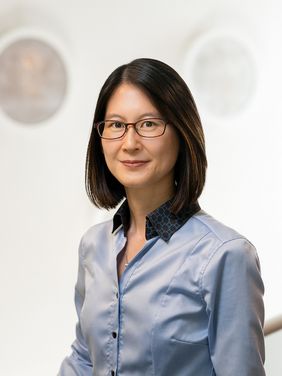
Prof. Suyu is Professor of Observational Cosmology at the TUM School of Natural Sciences and Max Planck Fellow at the Max Planck Institute for Astrophysics. She previously received an ERC Consolidator Grant in 2017. The ERC Advanced Grant will support her research at the interface of cosmology and astrophysics and contributes to the scientific program of the SFB1258.